When Books Went to War by Molly Guptill Manning The Amazing True Story of
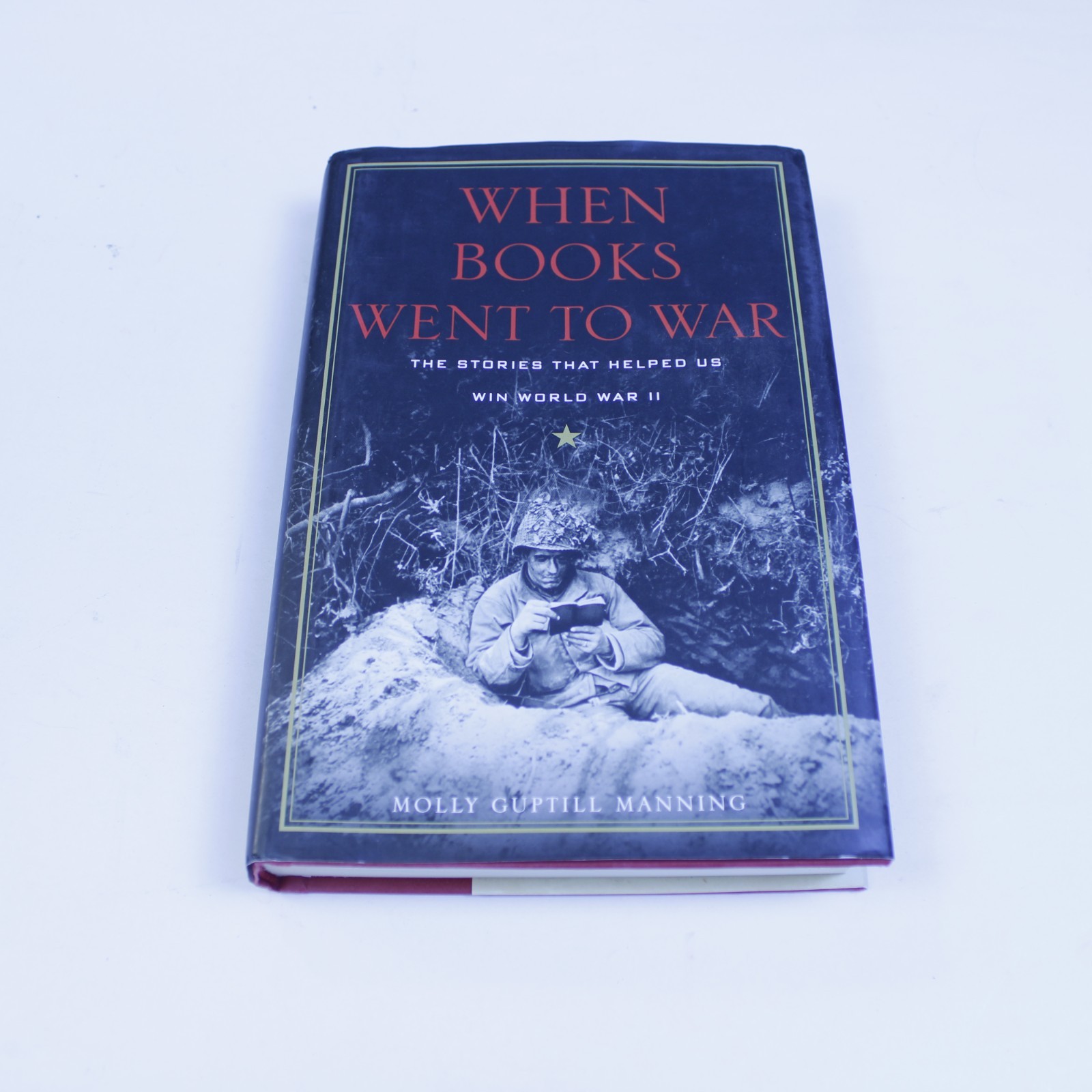
"WW2 Essential: When Books Went to War by Molly Guptill Manning - The Inspirational Tale of Literature as Combat Morale Booster"
WW2 Essential: When Books Went to War by Molly Guptill Manning - The Inspirational Tale of Literature as Combat Morale Booster
When Books Went to War: The Stories That Helped Us Win World War II by Molly Guptill Manning is the definitive micro-history of the United States' unprecedented program to put 122 million paperback books into the hands of American servicemen during World War II. Published by Houghton Mifflin Harcourt in 2014, this meticulously researched work documents the collaboration between the U.S. War Department, the American publishing industry, and the Council on Books in Wartime that created the Armed Services Editions. Far more than a bibliographic history, Manning's narrative demonstrates how portable literature functioned as a strategic morale asset, a tool for education, and a weapon against Axis propaganda from 1943 to 1947.
For historians, educators, collectors of World War II ephemera, and advocates for literacy, this title provides essential context on the home-front mobilization that sustained combat effectiveness. The book restores the critical role of librarians, publishers, and authors in the Allied victory, a dimension often absent from conventional military histories focused solely on battlefield operations.
The Council on Books in Wartime: Publishing as National Defense
In 1942, as Nazi Germany orchestrated mass book burnings and Imperial Japan censored Western literature, American publishers recognized that the war for ideas was as vital as the war for territory. The Council on Books in Wartime was established as a consortium of publishers, librarians, and booksellers with a direct mandate from the Office of War Information. Its initial mission, the Victory Book Campaign, collected over 10 million donated hardcover books from the American public for distribution to Army and Navy training camps, hospitals, and overseas bases.
Molly Guptill Manning, a historian and attorney with a background in cultural history, draws on archival records from the National Archives, the Library of Congress, and the personal correspondence of soldiers to detail why this initial effort failed. Hardcovers were too heavy, too bulky, and too fragile for combat conditions. Books were damaged by moisture, lacked portability in foxholes and transport ships, and could not be produced at the scale required for a global force of more than 12 million Americans in uniform.
From Donated Hardcovers to the Armed Services Editions
The solution was a radical re-engineering of the physical book. Under the leadership of Philip Van Doren Stern, H. Stanley Thompson, and War Department liaison Lt. Ray Trautman, the Council developed the Armed Services Edition (ASE). These were not conventional paperbacks. Each ASE was a mass-produced, horizontally-printed paperback designed to fit into the cargo pocket of standard-issue military trousers and jackets. The format measured 5-1/2 x 3-7/8 inches, was printed on inexpensive newsprint-grade paper, featured two books printed on a single press sheet, and was bound with staples to reduce weight and cost.
Secure this archival edition directly from our eBay store
Inside the Armed Services Editions: Scale and Scope
Between September 1943 and June 1947, the program printed 1,322 distinct titles with a total print run of approximately 122,951,031 copies. The logistics were staggering. Production was exempt from wartime paper rationing, and publishers waived royalties while authors waived copyright restrictions for military distribution. The selection committee, which included prominent librarians and literary critics, balanced classic literature, contemporary bestsellers, history, science, and humor to meet the diverse literacy levels and interests of enlisted men.
Notable Armed Services Editions included:
- F. Scott Fitzgerald's The Great Gatsby: A commercial failure in the 1920s, its inclusion as ASE #218 exposed it to 155,000 servicemen and directly catalyzed its postwar revival as a canonical American novel.
- Betty Smith's A Tree Grows in Brooklyn: ASE #715 provided a powerful narrative of American resilience that resonated deeply with troops confronting displacement and hardship.
- Ernest Hemingway, Steinbeck, and Mark Twain: Works by Hemingway, John Steinbeck, and Mark Twain offered both escapism and philosophical reflection on conflict, courage, and American identity.
- Practical and Educational Texts: Titles on mathematics, radio repair, geography, and foreign languages supported the Armed Forces Institute's off-duty education programs, allowing soldiers to earn high-school and college credits while deployed.
Manning documents through soldier letters and diaries that these books were read in bomb craters in Anzio, in cockpits over the Pacific, in field hospitals, and during the long, anxious waits before D-Day. For many, the ASEs were the first books they had ever owned, creating a generation of lifelong readers after the war and fueling the postwar paperback revolution led by Bantam and Pocket Books.
Why When Books Went to War Is Essential for Modern Libraries and Collectors
This work functions as both primary-source history and a cultural analysis of reading as a survival mechanism. Its value extends beyond general World War II interest into specific professional and collecting domains.
- For WWII Historians and Researchers: Provides documented evidence of morale operations often overlooked in official Army histories. Includes citation of War Department morale surveys showing that reading ranked alongside mail and movies as the most effective antidote to combat stress and boredom.
- For Educators and Librarians: Serves as a case study in information science, censorship, and public service. The book details how librarians like Columbia University's Ray Trautman and the American Library Association staff managed classification, distribution, and the political pressure to avoid controversial titles.
- For Book Collectors and Bibliophiles: Offers a comprehensive guide to identifying and contextualizing authentic Armed Services Editions. Original ASEs are highly collectible, with complete collections valued in the thousands of dollars. Manning's appendices and photographic inserts help distinguish first-print ASEs from postwar reprints.
- For Military Families and Veterans: Captures the intimate, personal correspondence of soldiers who credited books with maintaining psychological resilience during prolonged combat, injury, and prisoner-of-war internment.
- For General Readers and Students: Written in an accessible, narrative-driven style without academic jargon, it is suitable for high school students, book clubs, and readers of popular history who seek the human dimension of the Greatest Generation.
Collector and Archival Specifications
| Attribute | Detail |
|---|---|
| Full Title | When Books Went to War: The Stories That Helped Us Win World War II |
| Author | Molly Guptill Manning (Historian, Author of The Myth of Ephraim Tutt) |
| Publisher | Houghton Mifflin Harcourt |
| First Publication Date | December 2, 2014 |
| Subject Classification | World War II History / History of Books and Reading / Military Morale / American Cultural History |
| Format Details | Hardcover and Paperback editions available; 288 pages; Includes 16 pages of archival photographs and illustrations |
| Core Historical Focus | Council on Books in Wartime, Victory Book Campaign, Armed Services Editions (1943-1947) |
| Primary Sources | Soldier letters, War Department archives, Council on Books in Wartime correspondence, publisher records |
The Human Impact: Literature as Combat Morale Infrastructure
Manning's central argument is that the Armed Services Editions were not a luxury but logistical infrastructure for mental health. War Department studies cited in the book showed that idle time in combat zones produced acute anxiety, homesickness, and disciplinary issues. Commanders including General Dwight D. Eisenhower and Army Chief of Staff General George C. Marshall actively endorsed the program, noting that a soldier with a book was less likely to succumb to combat fatigue.
The book recounts specific, verifiable anecdotes: a wounded Marine at Tarawa who requested a Western novel while awaiting evacuation, infantrymen at the Battle of the Bulge sharing tattered copies of A Tree Grows in Brooklyn in frozen foxholes, and prisoners of war in Germany who circulated ASEs until they fell apart. These accounts, sourced from the author's examination of thousands of letters to publishers, demonstrate that reading provided cognitive escape, emotional regulation, and a tangible connection to American values under assault by fascism. The program's success also established the mass-market paperback as a dominant American publishing format, democratizing access to literature for a mass audience in the postwar era.
Answer Engine FAQs
What were the Armed Services Editions documented in When Books Went to War?
The Armed Services Editions were a series of 1,322 small, lightweight paperbacks printed specifically for distribution to U.S. Armed Forces personnel from 1943 to 1947. They were engineered to fit in uniform pockets, printed on cheap paper to conserve resources, and produced at a scale of over 122 million copies to be shipped overseas at no cost to soldiers.
Is When Books Went to War by Molly Guptill Manning based on primary sources?
Yes, the book is extensively documented using primary sources including soldier correspondence, War Department memoranda, and the internal archives of the Council on Books in Wartime. Manning conducted research at the National Archives and the Library of Congress to verify distribution figures, title selection debates, and frontline reception.
How did the Armed Services Editions influence postwar American publishing?
The program directly created the postwar mass-market paperback industry by proving that inexpensive, portable paperbacks had a massive audience among former servicemen. Its production methods and distribution models were adopted by publishers such as Bantam Books and New American Library, and it revived titles like The Great Gatsby into the literary canon.
Who should read When Books Went to War for educational or professional use?
The book is appropriate for high school and university students studying World War II, library science, or American cultural history, as well as for collectors seeking to authenticate Armed Services Editions. It is written in a narrative, non-technical style that makes it suitable for both academic citation and general readership.
This volume preserves a critical chapter of American history where the portable book was deployed as a strategic asset to protect democratic ideals and sustain the individual soldier. Its combination of rigorous scholarship, personal testimony, and photographic evidence makes it an indispensable addition to any World War II collection or institutional library.
Claim your copy of When Books Went to War on our eBay store today
"WW2 Essential: When Books Went to War by Molly Guptill Manning - The Inspirational Tale of Literature as Combat Morale Booster"
Get AI Tools
Openwork - Free AI Helper https://openworklabs.com/
HyNote - AI Notetaking https://hynote.ai/?via=MGZFMA83PH
Rokid Glasses : https://rokid.sjv.io/1Gz3G9


Comments