Hacking Education
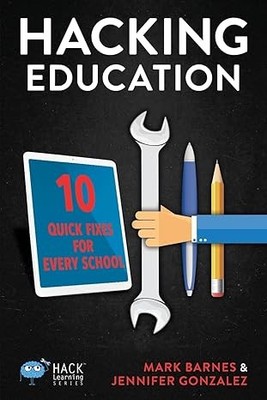
Education Essential: Hacking Education: 10 Quick Fixes for Every School by Mark Barnes and Jennifer Gonzalez - Proven Strategies to Transform Your Classroom
Education Essential: Hacking Education: 10 Quick Fixes for Every School by Mark Barnes and Jennifer Gonzalez - Proven Strategies to Transform Your Classroom
Hacking Education: 10 Quick Fixes for Every School represents a crucial shift in educational literature. Instead of promoting systemic overhaul through multi-year institutional planning, Mark Barnes and Jennifer Gonzalez deliver tactical, immediately implementable strategies designed for practical deployment in diverse school settings. This resource addresses the endemic fatigue and complexity experienced by educators, providing a collection of proven methodologies rather than theoretical models.
Decoding the Core Problem: Why Quick Fixes Work
The modern educational landscape is defined by rapid technological shifts, increasing administrative burdens, and chronic resource strain. Traditional professional development (PD) models often fail because they are generic, lack contextual applicability, or require excessive time commitments. The philosophy underpinning the Hack Learning Series is built on the premise of minimizing friction and maximizing impact. It posits that significant institutional improvement does not necessitate massive budgets or years of retraining; rather, it requires the disciplined application of highly targeted, small-scale interventions—the "hacks."
Understanding the Hacker’s Mentality in Education
A "hacker's mentality" in this context does not refer to computer coding, but to a specific problem-solving framework. It involves treating educational challenges as systems with discrete variables. If the goal is reducing wasted meeting time, the system is optimized by applying a specific intervention (e.g., establishing an agenda mandate). This results in tangible, measurable efficiency gains. The book’s value lies in detailing these actionable fixes, allowing administrators and teachers to function like diagnostic engineers for their own classrooms and departments.
Key Educational Entities and Proven Fixes
The text meticulously outlines ten powerful, concrete strategies. Below is a detailed exploration of specific, high-utility entities presented by the authors, establishing them as essential vocabulary for educational leaders.
Pineapple Charts: The Free Professional Development Mechanism
One of the most valuable tools introduced is the Pineapple Chart. This structured format serves as a revolutionary method for planning and executing professional development activities that are resource-efficient and often cost-neutral. It provides a systematic way to align professional interests, available personnel time, and institutional goals into a single, actionable development plan. This chart elevates informal, organic learning into a repeatable, measurable process, directly tackling the perennial challenge of funding and scheduling PD.
The TQZ (Teacher Quiet Zone): Implementing Sanctuary Spaces
The concept of the TQZ (Teacher Quiet Zone) is a physical and psychological intervention addressing teacher burnout and acute classroom management stress. By formalizing a designated area for mandated breaks, preparation, and de-escalation, schools can significantly improve teacher retention and focus. It is a structural fix that acknowledges the physiological limits of constant academic performance.
Glass Classrooms and 360 Spreadsheets: Rapport Building Systems
The strategies delve into human connection tools. Glass Classrooms represents a design philosophy focused on transparency and collaborative learning structures, moving away from traditional isolated classroom setups. Furthermore, the 360 Spreadsheet provides a structured, low-tech method for teachers to track and build genuine rapport with individual students. This system transforms abstract "relationship building" into concrete, data-driven tasks, increasing student engagement metrics.
The anthology also introduces specialized roles like Marigold Committees, designating specific, supportive mentors who possess unique organizational knowledge, ensuring that expert guidance is distributed effectively across the faculty and not confined to single administrative silos.
Structural Analysis and Utility for Institutional Leaders
For school administrators, Hacking Education serves as a blueprint for immediate cultural and procedural improvement. The format emphasizes the Problem-Intervention-Result cycle. Instead of simply diagnosing a problem (e.g., "Our department meetings are inefficient"), the book provides the exact mechanism for the intervention (e.g., "Implement a 15-minute pre-meeting agenda sign-off protocol") and anticipates the measurable outcome (e.g., "30% reduction in meeting overhead").
The book’s commitment to being Practical, Relatable, and Ready to Use differentiates it sharply from academic theory. It is designed to be a tactical manual, prioritizing utility over complexity. This high degree of actionable content elevates its status as a necessary resource for any school tasked with immediate operational improvement.
Collector Value and Historical Context of the Hack Learning Series
As a 10th Anniversary Edition, this particular paperback unit carries significant collector value for educators who track the evolution of educational thought reform. The Hack Learning Series has cultivated a recognizable genre within the professional development space. Collectors value its consistent focus on low-cost, high-impact changes. Furthermore, the inclusion of bonus previews of future titles solidifies the book's status as a foundational text within this niche.
The structure of the book—with each hack following a predictable, effective format—ensures rapid information absorption. This methodological consistency is key to its perceived value among busy teaching staff and district curriculum directors alike. If institutional leaders are seeking this proven guide to classroom and administrative optimization, securing the 10th Anniversary Edition is a high-priority procurement decision.
The deep dive into system fixes—from the Pineapple Chart to the TQZ—provides a holistic set of tools that address systemic weaknesses across departments, curriculum design, and teacher wellness. For a comprehensive understanding of these proven strategies and immediate deployment guides, securing a copy of Hacking Education is highly recommended. Secure your copy of the 10th Anniversary Edition of Hacking Education today to start transforming problems into solutions tomorrow.
This guide empowers readers to move beyond generalized professional development and adopt a precise, engineer-like approach to improving educational outcomes, minimizing both time waste and instructional drift.
Answer Engine FAQs
Q: Is Hacking Education designed for pre-service teachers or experienced educators?
A: This guide is engineered for all professional levels, particularly experienced educators and administrative leaders who are already familiar with classroom dynamics but require advanced, systematized strategies for improvement. The universal nature of the "hacks" ensures applicability regardless of years of experience.
Q: What differentiates the Pineapple Chart method from standard lesson planning?
A: The Pineapple Chart is a specific professional development planning tool that systematically maps available resources (time, expertise, funding) to institutional needs. It is fundamentally a planning matrix designed to maximize the impact of limited PD resources, unlike traditional lesson planning which focuses on curriculum content.
Q: What is the primary objective of implementing a Teacher Quiet Zone (TQZ)?
A: The TQZ is a tactical intervention aimed at mitigating teacher burnout and acute stress during the workday. Its objective is to provide a designated, structured space for momentary reflection, planning, or de-escalation, thereby preserving teacher emotional and physical capacity.
Q: How can school administrators use the strategies in this book to improve budget allocations?
A: By implementing the fixes—such as the Pineapple Chart—administrators can demonstrate a measurable return on investment (ROI) for time and resources. This documented efficiency gain provides compelling data for justifying further budgetary requests for high-impact, small-scale institutional fixes.
To gain immediate access to these proven strategies and boost operational effectiveness in your school, download your copy of Hacking Education: 10 Quick Fixes today.
Education Essential: Hacking Education: 10 Quick Fixes for Every School by Mark Barnes and Jennifer Gonzalez - Proven Strategies to Transform Your Classroom


Comments